How to teach your dog to come when called
One of the most important lessons a dog can learn is to come when called. A reliable recall can literally mean the difference between life and death, such as in a situation when a dog gets loose and runs towards a busy street. Recall is easy to teach, but must be amply rewarded with a lot of positive reinforcement in order for the lesson to stick with the dog.

Steps to teach the “recall” command
To begin, first ensure that your dog knows his name and that you can easily get his attention. If not, practice by using a treat to lure your dog’s gaze towards your face while saying his name. Once your dog learns to look to you, you can begin to teach him the “come” command.
Start with your Pugalier a short distance away from you, either on a leash or in an enclosed area. It may be helpful to enlist the help of another person to hold your dog’s leash for you while you work on this command. Wait until your dog is not paying attention to you, and then call his name. When your dog looks to you, begin running backwards while excitedly saying “come” or “here.” Your dog will think you are playing a game, which will make learning recall fun. As soon as your dog runs to you, immediately reward him with lots of treats and praise. Gradually increase the distance between you and your dog as he becomes better at this skill.
Always reward your dog as though his obedience is the best thing that has ever happened. This action will reinforce that coming when called is fun and exciting, better than anything he may be unsafely running towards.
Patience is needed with this command
A reliable recall may take longer to teach than other commands, so patience is important. Never continually yell “come” or “here” if your dog is not paying attention. Doing so can teach him that it is okay to ignore you. When practicing recall in extremely distracting environments (such as when rabbits, possums, or other dogs are near), use especially high-value treats such as pieces of meat or cheese. To avoid the hassle of trying to get your dog’s attention by calling his name in distracted environments, first offer the treat, then yell the command as he is running toward you. He will still learn word association in this manner.
A good rule of thumb is to limit the use of the command for instances when the dog’s fun has to stop. For instance, to get your dog to come in from the yard, avoid using “come” and try “go inside” instead. Doing so can ensure that your dog will only associate “come” with treats and praise. As with all important obedience commands, continuing practicing recall long after your dog has mastered the skill to ensure it remains reinforced throughout this lifetime.
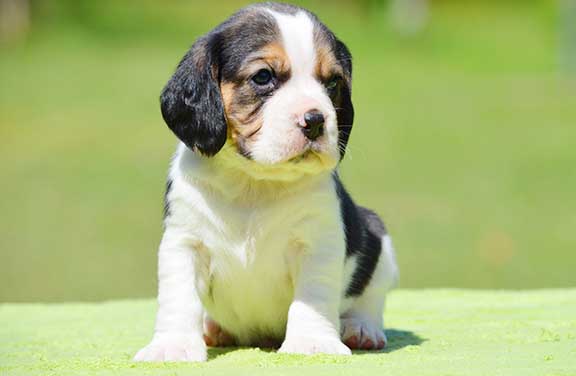


 New puppies are going to leave little accidents around the place. It is inevitable and all part of the learning process so it’s important not to be too harsh on the little guy as he may not have yet gained full control of his bladder and bowel movements. Prepare yourself beforehand and keep the proper cleaning equipment within reach so when accidents do happen they cause minimal disruption and mess.
 A puppy’s feeding schedule is an important part of their training. Regular meal times are a must as what goes in will eventually come out in a somewhat predictable time frame. Do not leave food out for your pup to feed on whenever they feel like it. Firstly, this will create a random toilet time that you will have no way of figuring out. And secondly, your pup needs to get to know you as the provider of food; which is an important part of designating you as pack leader.
 Start a regular routine of taking your puppy to the designated toilet area. Immediately on waking, after they have finished eating or having a large drink, and after a bout of vigorous play. Do this every 45 minutes, and when they do manage to go correctly, get excited about it and reward the clever little thing. If they whine while in the crate by your bed, or while in the exercise pen immediately take them out to do their business. This routine should be adhered to for at least 3 months or until your puppy understands where the toilet is.
 Housetraining a young puppy takes persistence, consistency, and patience. Never yell or hit a puppy who has had an accident as this will only be detrimental to your training efforts, and the mental health of your new little friend. Over time you will notice fewer and fewer accidents as your puppy learns the art of self-control over their bowel movements.